Many people notice the midface loses fullness with age, and the skin slowly drifts downward. Cheek fillers are one of the most common ways to add that volume back without surgery.
This guide to dermal fillers for cheekbones explains what they are, the main filler types, and how long cheek fillers last. You will also learn what the process feels like, what it costs, how safe it is, and who makes a good candidate.
Key Takeaways
- Cheek fillers add volume and gentle lift to the midface without surgery or extended downtime.
- The two main filler families are hyaluronic acid (Juvéderm Voluma, Restylane) and collagen-stimulating fillers (Radiesse, Sculptra).
- Results typically last for 6-12 months, up to roughly 2 years, depending on the material and your facial composition.
- Hyaluronic acid fillers can be dissolved with an enzyme, which often reassures people who are new to fillers and unsure they’ll love the results long-term.
- The best outcome comes from matching the filler and technique to your face, guided by a skin assessment and a licensed injector.
What Are Dermal Fillers for the Cheeks?
Dermal HA fillers can be placed on and around the cheekbones to add volume and gently lift the space between eyes and jaw. Fillers are non-surgical, and they rank among the most common aesthetic treatments. You may see them called cheek dermal fillers or dermal fillers cheekbones. Both terms describe the same cosmetic injection treatment. The American Academy of Dermatology notes that most filler treatments take between 15 and 30 minutes and require only one office visit.
Instead of using a single go-to product at SHINE, our dermal filler treatments are chosen specifically for your beautiful face. That customized approach helps keep your results looking natural and not overdone.
Why Cheeks Lose Volume: Hollow, Sunken, and Sagging Cheeks
As you age, your face loses collagen and fat, along with some of the bone that supports the cheeks. The cushion under your skin gets thinner, so the cheeks flatten and the skin begins to drift downward.
Hollow or sunken cheeks come from that loss of deep volume, which can leave shadows below the cheekbones. Dermal fillers for hollow cheeks and dermal fillers for sunken cheeks work by replacing that deep cushion so light hits your face more evenly.
Sagging cheeks come more from loose skin that settles lower on the face. Dermal fillers for sagging cheeks add support up high on the cheekbone, which can gently lift the tissue below. Because the midface holds up the tissue below it, replacing lost volume up high can also soften folds around the mouth.
Types of Dermal Fillers for Cheekbones
Most cheek fillers fall into two groups: hyaluronic acid gels and collagen-stimulating fillers. The right one for you depends on how much volume you need and how you want your results to build.
There is no single best filler for cheeks that fits everyone. The best filler for cheeks depends on your facial anatomy and whether you want a result you can adjust later.
Filler Type |
Example Brands |
Typical Longevity |
Reversible? |
| Hyaluronic acid (HA) | Juvéderm Voluma, Restylane Lyft/Contour | ~6-12 months | Yes |
| Calcium hydroxylapatite (CaHA) | Radiesse | Up to ~1 year (contouring) | No |
| Poly-L-lactic acid (PLLA) | Sculptra | Up to 2 years | No |
Hyaluronic Acid Fillers (Juvéderm Voluma, Restylane)
Hyaluronic acid (HA) fillers such as Juvéderm Voluma and Restylane are the most common choice for cheeks. They add volume right away, and they suit first-timers well because the effect can be adjusted or undone.
That safety net matters. Research indexed by the National Library of Medicine describes how hyaluronic acid fillers can be dissolved with an enzyme called hyaluronidase when a correction is needed.
Collagen-Stimulating Fillers (Radiesse, Sculptra)
Collagen-stimulating fillers work differently. Calcium hydroxylapatite (Radiesse) is thicker and adds firm lift while it prompts your body to make its own collagen. Mayo Clinic notes it can restore volume in the cheeks. Those results last up to a year when used for contouring and three years when used to fill wrinkles.
Poly-L-lactic acid (Sculptra) builds volume slowly across a few sessions as new collagen forms. These fillers are not reversible, so precise placement matters. If you prefer a natural option that uses material from your own body, you might consider exploring PRF EZ Gel for added volume.
How Long Do Cheek Fillers Last?
A common question is how long dermal fillers last in cheeks. The answer depends on the filler material and how fast your body breaks it down. Where the filler sits matters too, and because cheeks move less than lips, filler here often lasts longer.
As a rough guide, HA fillers hold for about 6-12 months, while collagen-stimulating options can last up to around 2 years. Regular touch-ups keep your results steady, and SHINE plans those follow-ups with you so the change lasts.
What to Expect: The Cheek Filler Process
Every SHINE filler visit starts with assessment and planning before any treatment begins. You start with a consultation and skin analysis so your injector understands your goals and complexion completely before any needle comes out.
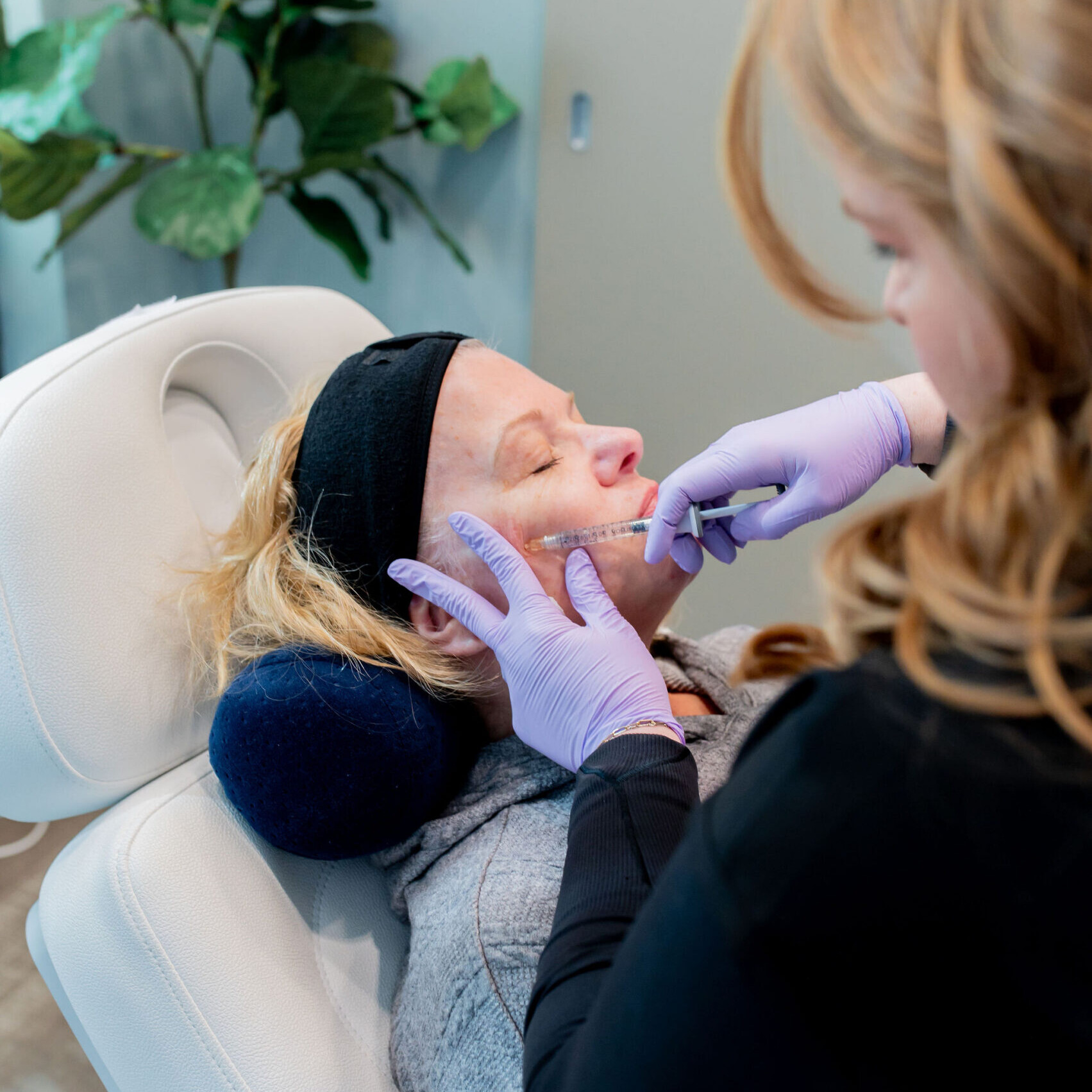
The injection appointment usually takes 15-60 minutes. This includes time to talk through your goals, inspiration, and anything else you want to discuss. Your provider cleans the area and may apply numbing cream. Then they place the filler along the cheekbone with a fine needle or cannula, so most people feel mild pressure more than sharp pain.
“When we treat cheeks, we add small amounts at a time and step back to check your face from several angles. Building the volume gradually is how we keep the result looking like you,” says Lauren Wages Edeker, PA-C. She is SHINE’s Chief Clinical Officer for Aesthetics.
Afterward, you can expect mild swelling or a little bruising for a few days. Results show right away and keep refining over 2-4 weeks as any swelling settles.
Cost, Safety, and Side Effects of Cheek Fillers
Cost depends on the filler type and how many syringes your plan needs, so prices vary from person to person. The most honest number comes from a consultation, where your injector can quote your specific plan.
Common side effects are usually mild, such as swelling or bruising near the injection sites, along with some tenderness for a day or two. Serious problems are uncommon, and choosing an experienced, licensed injector who uses FDA-approved products lowers your risk.
The reversibility of HA fillers adds another layer of safety. Fillers and neurotoxins do different jobs, so it helps to understand how Botox compares to fillers before you decide.
Is Cheek Filler Right for You?
Dermal fillers for cheekbones may suit you if you have noticed cheek volume loss and want a subtle boost. The best candidates hold realistic expectations, and cheek filler works best as part of your overall facial balance rather than a single dramatic change.
Some people should wait or talk with a provider first, including anyone who is pregnant or has an active skin infection near the treatment area. A consultation sorts this out quickly.
“The happiest patients come in with clear goals and a realistic sense of what filler can do,” says Edeker. “We would rather set honest expectations at your first visit so you love how you look months down the road.”
SHINE approaches cheeks as part of facial balancing, which means treating your face as a whole so each feature supports the others. That is how filler ends up looking like you on a good day.
See Your Cheek Contour Come to Life at SHINE
Your cheeks deserve a plan built around your face, not a one-size product. At SHINE in Alpharetta, GA, dermal fillers for cheekbones start with a VISIA™ skin analysis. That measurement lets your injector design a natural-looking result you can see coming.
When you are ready to restore volume and lift with care from licensed medical experts, schedule a free cheek filler consultation.
Cheek Filler FAQs
The main downsides are temporary side effects like swelling or bruising, plus the cost of repeat touch-ups since results fade over time. Rare complications are possible, which is why injector skill matters.
Cheek fillers can create a subtle lift by restoring volume in the midface, which supports the tissue below and softens folds near the mouth. They do not replace a surgical facelift for significant sagging.
Most people repeat cheek fillers every 6 to 12 months for HA products, or up to about every 2 years for collagen-stimulating fillers. Your injector will set a schedule based on your personalized plan, how your body reacts to initial injections, and the results you hope to achieve.
Cheek filler cost varies by the product used and the number of syringes your plan requires, so a personalized quote comes from your consultation. SHINE reviews pricing and financing options with you before treatment. SHINE members earn additional discounts, lowering the cost of cheek fillers.